

Quality data is the bedrock of a high-functioning supply chain, while inconsistent or inaccurate data fuels overspending and underperformance. Unfortunately, most supply chain leaders are unaware that their data is creating a ripple effect throughout their networks.
You might think data maturity is a prerequisite for completing a supply chain network design, but that’s not the case. Network modelling can quickly reveal gaps in your data, allowing you to make assumptions and develop a plan to close them over time.
What is Supply Chain Data?
Supply chain data encompasses all the information that powers decision-making, from supplier lead times to customer purchase behaviour. It provides the visibility businesses need to forecast demand, optimise inventory and respond to disruptions. Modern software tools, IoT devices for tracking and monitoring and predictive analytics help organisations bring operational and transactional data together to make faster and more accurate decisions.
When designing a supply chain network, you’ll need visibility into several data categories, including:
- Product: SKU or item master data that define product attributes, such as dimensions, weight and quantities (cases, inners, pallets, etc.), and a hierarchy to properly aggregate relevant logistical groupings (receiving, handling, put-away, picking, packing and shipping)
- Supply: Data about suppliers, purchase orders/volumes, lead times and COGS
- Demand: Historical sales volumes, customers’ physical locations and seasonality where applicable
- Transportation: Mode of transportation, freight spend, freight terms, transit times, transportation lanes and the associated KPIs
- Warehousing and Distribution: Facility locations, layouts, sizing, capacities, throughputs, fixed and variable operating costs and more
- Inventory: Historical on-hand quantities over time, cycle and safety stock levels, holding costs and more
- Costs: Supply chain profit and loss insights, which can provide the basis of comparison for future optimisations
This is just a snapshot of the type of data your supply chain network design will analyse. Having clear visibility into the above data types can greatly improve the efficiency and effectiveness of your supply chain.
The Importance of Supply Chain Data
High-quality, real-time data enables better planning, forecasting and responsiveness. When retailers, manufacturers and distributors can trust their data, they can make faster, smarter decisions. They can engage in demand forecasting, optimise their transportation and better understand the performance of their supply chain network.
For example, if your data shows an on-time delivery rate of 60 percent, knowing other data points like transit times, fulfilment rates and stockouts can reveal the contributing factors and enable you to work toward a solution.
Conversely, poor data can ripple through an organisation, resulting in missed orders, wasted inventory, stockouts and inefficient network operations. Good data is a strategic asset you can utilise to improve your business outcomes.
What Causes Poor Quality Data?
Poor data doesn’t happen by accident. It’s often the result of disconnected systems, inconsistent processes and insufficient governance.
Factors that lead to poor quality data across your supply chain network include:
- Data silos: Having separate systems that can’t communicate can lead to errors in your inventory, causing stockouts, overstocks or shipment delays.
- Inconsistent supplier or SKU data: Poor SKU data makes it difficult to track inventory and leads to shipment errors or consumers receiving the wrong products.
- Outdated or legacy systems: Attempting to manage data manually or via legacy systems can make managing an omnichannel operation difficult, leading to errors, delays and confusion.
- Outdated information: If you don’t have a system for regularly updating your data, it could be out of date, and you won’t even know it. This can lead to “noise” within your results.
- Lack of training: To achieve enterprise-level data quality and visibility, the entire organisation must be trained on the what, why and how behind your data practices. Without this, processes slip, and data quality suffers.
- Inconsistent formats: Having different formats for each dataset can create challenges down the road, especially when integrating disparate systems.
- Poor data governance: Ongoing data governance is just as important as initial data collection for ensuring accountability and preventing the decay of data quality.
Signs of Poor Supply Chain Data
Poor supply chain data can cause many subtle, but costly, problems. Many of our clients come to us for help with supply chain data issues because they’re spending more time reconciling data than acting on the information from their reports.
If two or more of the following apply to your business, your organisation’s efficiency may be suffering due to poor data quality:
- You don’t have a strategy for collecting, processing or manipulating data.
- You rely on the tribal knowledge of a few individuals for accessing and aggregating data.
- You use manual data processes rather than automating with BI tools.
- You don’t have a data management plan.
- Different data tools are used across departments.
- You have disparate data storage across systems, such as multiple ERP or WMS instances.
- You have inconsistent SKU mapping or customer IDs.
- You have restricted back-end access and front-end manipulation of your data.
- Your master data maintenance is cumbersome or not properly managed.
- Your decision makers lack trust in your data and don’t use it when making key decisions.
- There’s no single source of truth for your supply chain data.
- The data you do have is conflicting or contradictory.
- You don’t have an easy way to get real-time visibility into your data.
Overcoming Poor Data with a Supply Chain Network Design
A supply chain network design forces organisations to confront the truth about their data. By mapping the flow of products, orders and costs across the network, gaps and inconsistencies become visible. Creating a “digital twin” of your supply chain is a cost-effective way of simulating decisions and testing models to identify inefficiencies, gaps or inconsistencies.
This modelling process enables teams to standardise definitions, improve data accuracy and develop a single source of truth. Using data governance frameworks and master data management (MDM) can help maintain quality once you’ve designed an effective system.
Let’s take a closer look at some of the ways a supply chain network design can help you overcome poor quality data:
The Iterative Data Improvement Approach
Supply chain network design projects follow an iterative methodology that naturally uncovers and addresses data gaps. The data collection phase identifies what data exists, what’s missing and what’s unreliable. This assessment becomes the foundation for modelling immediate assumptions and long-term data improvement strategies.
Creating Intelligent Assumptions
When data gaps are identified, existing data trends, industry benchmarks and statistical methods can help create reasonable assumptions. For example:
- When necessary, transportation cost data can be estimated using distance-based models and industry rate structures.
- Missing item or SKU attributes can be assumed based on existing characteristic data.
- Facility operating costs can be estimated using industry standards adjusted for local market conditions.
Building Data Collection Processes During Implementation
The network design process naturally creates opportunities to establish better data collection mechanisms. As you open facilities, establish new transportation lanes or redesign processes, you will be building proper data capture from day one.
Establishing Data Governance Frameworks
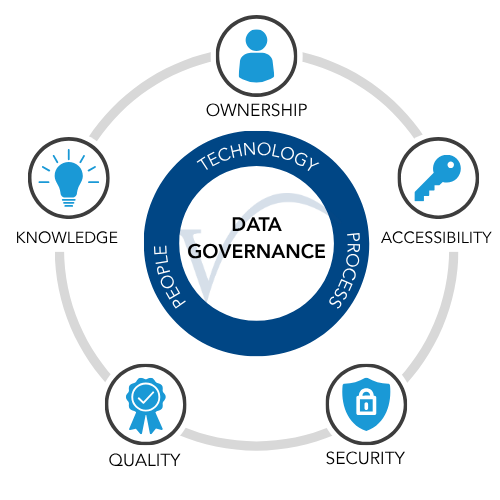
A comprehensive supply chain network design includes recommendations for ongoing data governance, including data ownership, auditing processes, automated data validation rules and standardised formats. Data requirements uncovered during the modelling process can help establish these frameworks.
Change Management and Training
Successful data improvement requires organisational buy-in. The network design process can identify training needs, highlight the importance of data quality to frontline employees and create accountability structures that help sustain data governance practices.
Optimise Your Supply Chain Network with enVista
Data is the foundation of every decision you make. enVista’s proven methodology combines advanced analytics with deep industry expertise to design an optimised network that balances cost, service and risk while improving your data foundation for long-term success. We help organisations regain control of their operations through supply chain network design, analytics integration and master data management.
With deep expertise across retail, manufacturing and logistics, enVista enables a single, trusted view of your supply chain.
Be informed. Be connected. Be data driven.
Contact us to learn how data visibility can unlock your supply chain’s full potential.