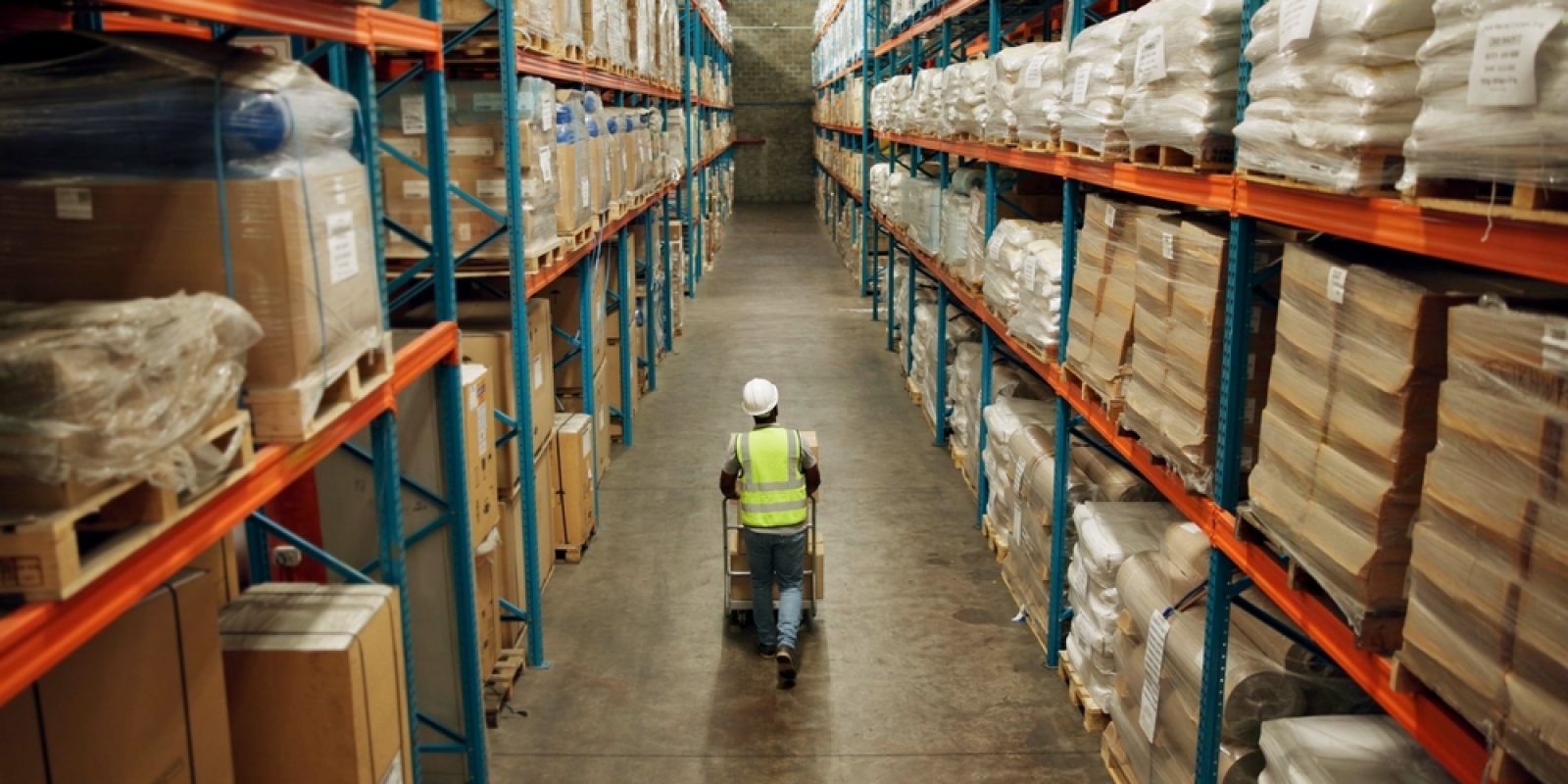
Travel and search are two of the most time-consuming and expensive tasks in the warehouse. The average warehouse worker operating in a manual environment can spend up to 50 percent of their time just traveling to the pick location and searching for the right SKUs.
Strategic slotting and efficient pick paths can certainly help cut down on travel time, but as throughput expectations continue to rise, the gains these improvements can provide will eventually hit a ceiling. For high-volume warehouses managing 1,000 or more lines per day, the single most valuable solution for reducing travel time while continuing to scale is implementing autonomous mobile robots (AMRs).
What are Autonomous Mobile Robots
Autonomous mobile robots are just what they sound like – robotic systems that can move independently throughout the warehouse. They transport goods across facilities with dynamic self-navigation and can be highly valuable for optimizing picking routes and enabling more efficient picking and packing processes.
These robotic solutions do not replace warehouse associates but work collaboratively with them to complete higher volume picks at a faster rate and with less grunt work for the associate.
How AMRs Work in the Warehouse
Autonomous mobile robots operate by a goods-to-person model, but advanced AMR technology is taking it a step further by enabling orders-to-person functionality. This enables entire orders to be delivered to the warehouse associate, rather than disparate goods.
Here is a real-world example of how an AMR would operate during an order fulfillment process in the warehouse.
Step one
The warehouse management system (WMS) or other supply chain execution software receives and assigns the order fulfillment task for completion.
Step two
The AMR, configured with the necessary warehouse data, uses vision and navigation technology to travel to a pick station where an operator is stationed to load boxes for orders.
Step three
The AMR, retrofitted with a pick-to-light system, activates upon reaching the pick location to identify the exact products that need to be picked for the order.
Step four
A screen on the AMR displays the SKU and quantity for the pick, notifying the associate of the exact picks needed for the order.
Step five
The associate makes the picks and loads them onto the AMR.
Step six
The AMR drives itself to its next location, as assigned by the WMS, whether that be the next pick location or the order fulfillment station.
Benefits of AMRs in the Warehouse
Autonomous mobile robotics deliver travel time optimization in multiple ways across multiple use cases in the warehouse.
- Case picking – By bringing cases directly to the operator, AMRs reduce time spent walking between pick locations, increasing productivity and mitigating fatigue. The combination of the put-to-light system and screen display showing the exact items and quantities to be picked enables faster and more accurate picks, increasing order accuracy while reducing the burden on the associate.
- Multi-order packing – Multiple associates can be packing orders at multiple packing stations. The AMR will bring high moving products in bulk to the order packing stations so operators can pack orders and pull other pieces in waves. This eliminates the need for the associate to return to the pick location for large or multi-line orders.
- Mobile storage unit handling –AMRs can act as mobile shelving or storage units, transporting entire racks or totes of inventory to workstations. This allows warehouses to flexibly reconfigure layouts, reduce congestion in aisles and maximize space utilization without requiring fixed conveyor systems.
- Returns processing –AMRs can shuttle returned goods directly to designated inspection or restocking areas, ensuring that returned items are quickly processed and reintroduced into inventory.
- Replenishment –AMRs can deliver replenishment stock from reserve storage to forward pick locations. This keeps high velocity SKUs available at the point of use, minimizing downtime and ensuring associates always have the products they need.
- Safety and ergonomics –By reducing the amount of walking, lifting and repetitive travel, AMRs lower the risk of workplace injuries. Associates spend more time on value-added‑ tasks rather than physically demanding transport.
WES Orchestration: The Brain Behind the Bots
Here’s the catch: reducing travel time in your warehouse isn’t just about implementing robots. Robotic solutions are powerful, but what really augments their value is the software orchestrating them. Without the right software, all you have is an expensive new piece of equipment taking up space.
Real, lasting ROI shows up when warehouse automation is powered by highly intelligent, multi-agent orchestration software. While a WMS fits the bill for a lot of facilities, highly automated facilities often find themselves in need of more orchestration power. This gap can be filled by the warehouse execution system (WES).
What is a Warehouse Execution System?
The warehouse execution system combines core functionality from both the warehouse management system (WMS) and the warehouse control system (WCS). This allows highly automated facilities to benefit from both the orchestration of inventory and product throughout the warehouse, as well as the orchestration of robotic and automation solutions that support key functions in the warehouse like inventory movement and order fulfillment.
While WES platforms have been around for 10+ years, recent advancements and newer software architectures are enabling a level of multi-agent orchestration and optimization that is creating a significant competitive advantage when enabled alongside key robotic systems like AMRs.
How a Warehouse Execution System Orchestrates AMRs
Warehouse execution systems aren’t replacing warehouse management systems; they’re augmenting them with more intelligent multi-agent orchestration. With an intelligent WES integrated into your AMR workflow, you’ll benefit from even higher levels of dynamic task allocation, workload balancing and real-time reprioritization.
Here are some real-life examples of how a WES can intelligently orchestrate autonomous mobile robots:
- Mobile device integration. Order pickers can use wearables or mobile devices integrated with the WES and AMR for a constant, portable view of the next pick.
- Advanced task orchestration. WES integration provides highly advanced task orchestration that assigns tasks based on priorities that you’ve determined ahead of time. For example, you could program the WES to orchestrate the AMR to complete order fulfillment tasks based on service level agreements.
- Asset management. The WES acts as a traffic controller and capacity planner for your AMRs. It can continuously balance AMRs and carts against order flow, determining not just how many you have, but how many you need to hit throughput and service targets.
- High-priority orders. The WES identifies urgent orders and orchestrates AMRs to pick and deliver those items first, while balancing standard order fulfillment.
The ROI Behind Autonomous Mobile Robots
In the warehouse, everything boils down to ROI. Reducing travel time isn’t just about shaving some time off a common task; it’s about creating an operation that delivers a better product to your end-customer while putting more money back in your pocket.
Here are a few real ROI proof points from WES-orchestrated AMRs:
- Reduced labor costs: In the warehouse, time is money. The less time your associates spend traveling through the warehouse, the more time they can spend doing value-added tasks, and the lower your labor costs will be.
- Higher order accuracy: Every inaccurate order that makes it to the end customer is a detriment to your company’s reputation and profitability. AMRs increase order accuracy, helping you build a better relationship with your customers.
- Faster order cycle times: Faster order cycle times benefit your facility in several ways, increasing inventory turnover, reducing operational costs and decreasing lead times for higher customer satisfaction and loyalty.
- Increased throughput. In the warehouse, throughput is king. More efficient picking processes enable more orders to get out the door in a shorter period of time.
- Better scalability. Manual processes don’t scale. Enabling scalable processes with advanced AMR technology and orchestration will benefit the business far beyond the four walls.
Discover Warehouse Excellence with enVista
Autonomous mobile robots, when orchestrated by an intelligent WES, transform warehouse operations from labor-intensive and rigid to scalable, accurate and customer focused. The result is faster cycle times, lower costs and a foundation for growth that manual processes simply can’t deliver.
Learn more about how smart warehouses are overcoming common labor challenges. Have lingering questions you want answered by an expert in both robotics and orchestration software? Get connected here.